

ESOX Group introduces defence applications of breakthrough solid-state battery technology
ESOX Group introduces defence applications of breakthrough solid-state battery technology
ESOX Group introduces defence applications of breakthrough solid-state battery technology
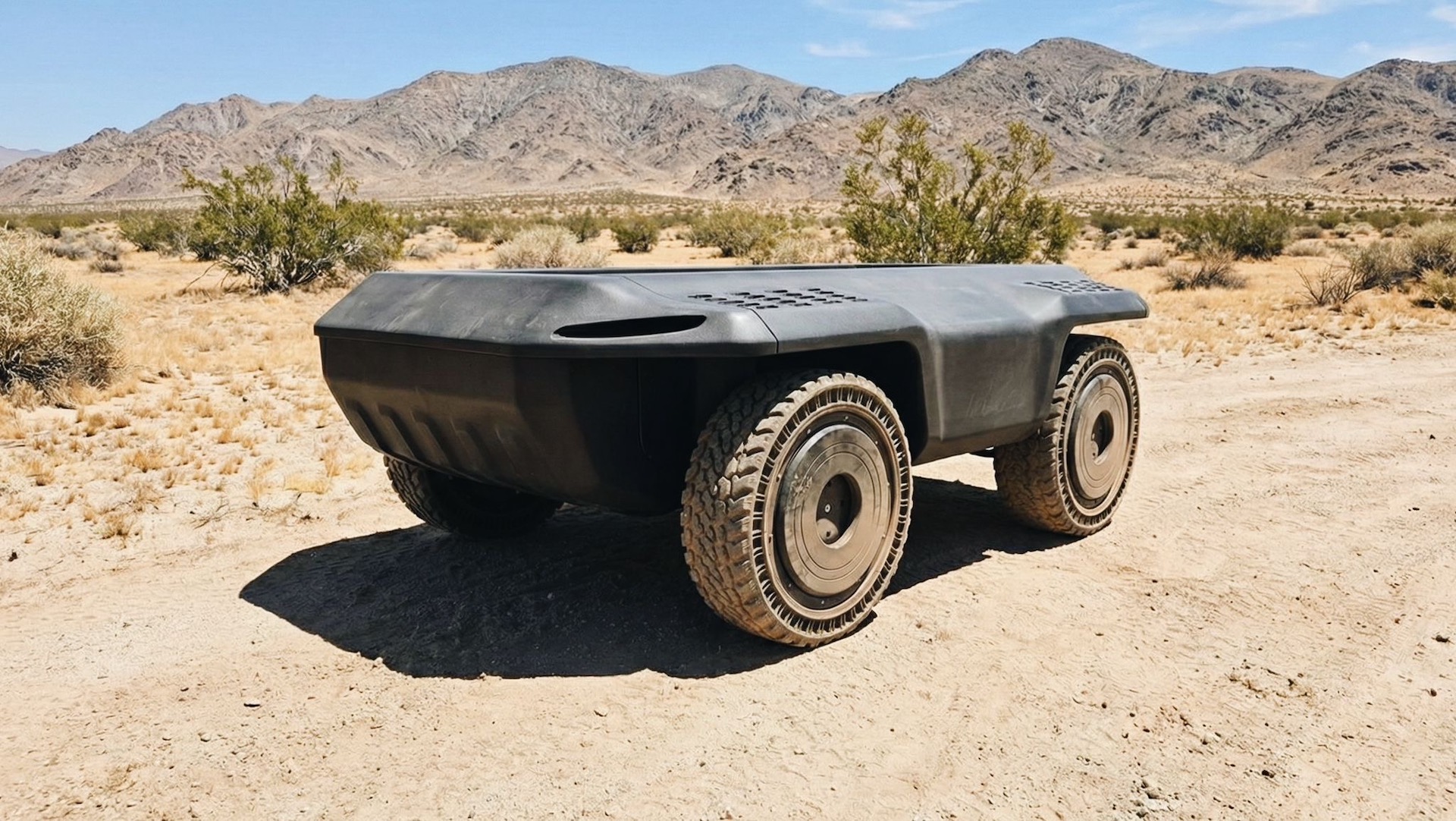
ESOX X2 UGV
LAS VEGAS, NV, UNITED STATES, January 6, 2026 /EINPresswire.com/ -- ESOX Group has set out how a new generation of solid-state battery technology will be applied to defence platforms. Following the announcement at CES 2026 by Donut Lab of the world’s first production-ready solid-state battery, ESOX confirmed that it is working under a defence-specific licensing framework to deploy the technology across military and security applications.
The company is completing final defence testing of the solid state technology with selected partners ahead of a production ramp-up in the second half of 2026, aligned with qualification and integration timelines.
While Donut Lab’s announcement focused on bringing solid-state batteries into passenger vehicles, ESOX is addressing how the same technology translates into defence and security applications, where safety, survivability, endurance and supply-chain resilience are critical.
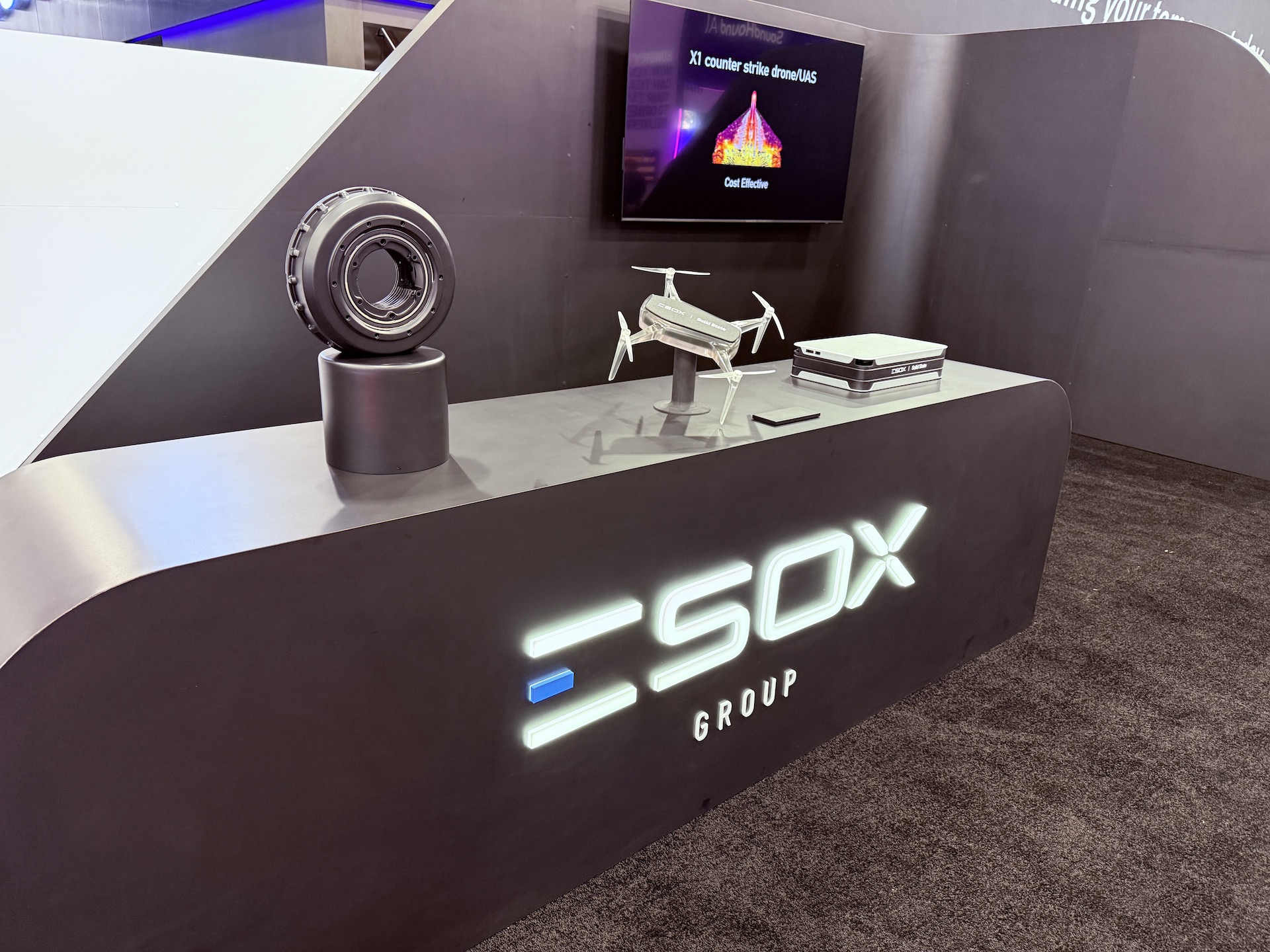
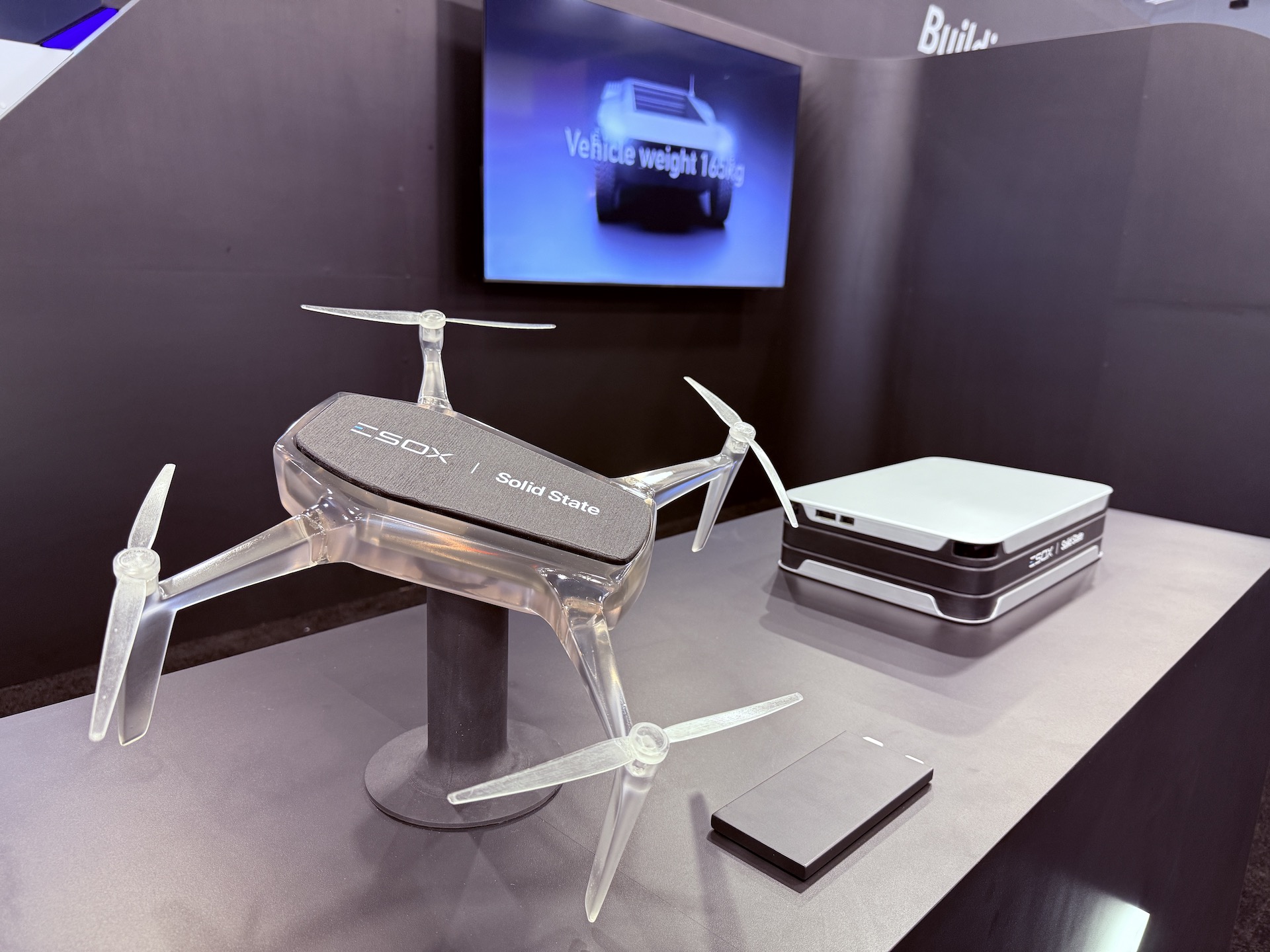
At CES 2026, ESOX is presenting its X1 interceptor drone and X2 UGV technology demonstrator, which serve as integration platforms for future solid-state battery deployment across uncrewed air and ground systems.
“As defence spending rises, so does demand for batteries across uncrewed systems and critical military technologies,” said Dan Walmsley, CEO of ESOX Group. “For Europe and its allies, ensuring an assured and resilient battery supply chain is becoming as important as performance itself. Our new solid-state technology offers a way to improve survivability, endurance and safety while strengthening domestic and allied industrial capability.”
Applying solid-state batteries to defence platforms
For defence applications, the range, payload, endurance, survivability and logistics are all directly shaped by battery performance.
The solid-state battery technology introduced by ESOX and Donut Lab delivers characteristics that are particularly relevant to defence use. With an energy density of 400 Wh/kg, the technology enables lighter battery packs without compromising capacity. For aerial drones, where every gram affects range, endurance and manoeuvrability, this represents a material operational advantage.
The batteries are designed for extreme longevity, with a design life of up to 100,000 charge cycles and minimal capacity fade over time. For defence operators, this reduces replacement frequency, lowers lifecycle cost and improves fleet readiness.
The solid-state design eliminates flammable liquid electrolytes, thermal runaway chains and metallic dendrites. This removes the root causes of battery fires and improves survivability when batteries are damaged, stressed or exposed to hostile conditions.
Performance has been validated across extreme temperatures. Testing shows the batteries retain over 99% of capacity at –30°C and continue to retain over 99% capacity at temperatures exceeding 100°C, with no signs of ignition or degradation. This resilience is critical for military systems expected to operate reliably across diverse and unpredictable environments.
Charging performance is equally important. Solid-state chemistry allows rapid charging without the limitations typically imposed on lithium-ion systems, supporting faster turnaround times and operational tempo.
Just as important for defence platforms is design freedom. The batteries can be produced in custom sizes, voltages and geometries, enabling freeform integration into airframes, vehicle structures or chassis. Rather than designing platforms around rigid battery formats, engineers can shape power systems around mission requirements, payload placement and protection needs.
X1 and X2 as integration platforms
At CES, ESOX demonstrated how this approach translates into real systems through its X1 and X2 platforms.
The X1 interceptor drone is a cost-effective counter-UAV platform built on a multi-role airframe. It supports long-range communications and sensor integration and uses ESOX’s AI algorithms for target acquisition and strike accuracy. The platform has been designed with future battery integration in mind, allowing power systems to be optimised for range, endurance and survivability rather than constrained by legacy formats. The prototype’s first flight is planned for January 2026, with an industrialised variant due in April.
The X2 UGV technology demonstrator is a compact autonomous ground platform designed to showcase ESOX’s integrated propulsion and control systems. Powered by four 12-inch Theron Motors in a tank-steer configuration, X2 highlights how drivetrain simplicity, precise control and modular power architectures can be combined in a single platform. The vehicle is attracting enquiries from UGV manufacturers seeking integrated propulsion solutions and serves as a testbed for solid-state battery deployment.
Together, X1 and X2 provide ESOX with practical platforms for integrating solid-state batteries into defence-grade systems, moving beyond laboratory validation toward operational use.
Batteries as a strategic defence capability
Batteries have quietly become one of the most important enabling technologies in modern defence. As NATO nations increase defence spending and accelerate the adoption of uncrewed and autonomous systems, demand for advanced batteries is rising sharply across air, land, sea and space domains.
UAVs now play a central role in modern warfare, driving rapid expansion in drone manufacturing across Europe and North America. Each platform requires a battery, and often multiple batteries across its operational lifecycle. As volumes scale, the question of where those batteries are designed, manufactured and sourced has become a strategic concern.
China currently dominates much of the global battery value chain, from raw materials through to cell manufacturing. For defence planners, this concentration presents a growing dependency at a time when battery demand is rising in parallel with defence budgets.
ESOX believes this moment represents an opportunity to strengthen European industrial capability, reduce supply-chain risk and deploy new battery technologies that improve battlefield performance.
Designed and built in Europe
A key aspect of the solid-state battery technology is its supply-chain profile. The batteries are made entirely from abundant, affordable and geopolitically safe materials and do not rely on rare or sensitive elements. They also demonstrate a lower cost than conventional lithium-ion technologies.
For ESOX and its defence partners, this supports a designed in Europe, built in Europe approach aligned with NATO and allied industrial strategies.
Part of a wider ESOX technology suite
Solid-state batteries form one element of a broader ESOX technology stack. This includes high-torque, low-signature electric propulsion, no-code software environments for rapid control-system development, and Digital Twin 2.0 simulation that allows the same software to run on both hardware and virtual platforms.
By integrating these capabilities, ESOX aims to shorten development cycles, reduce deployment risk and deliver systems guided by mission needs rather than fixed technology constraints.
Visitors to CES 2026 can view the scaled X1 model, the X2 demonstrator and live video demonstrations on the ESOX stand in the West Hall (5759).
-Ends-
Notes to editors
About ESOX Group
ESOX Group is a pan-European defence technology company developing integrated electric propulsion systems, advanced software, and simulation technology for unmanned ground, airborne, and water-borne vehicles. Formed in 2025 through the strategic demerge of Donut Defence and acquisition of ESOX Aero, the company provides next-generation platforms that enhance protection and operational capability for NATO and allied nations.
James Parsons
press@esoxgroup.com
ESOX Group
Visit us on social media:
LinkedIn
Legal Disclaimer:
EIN Presswire provides this news content "as is" without warranty of any kind. We do not accept any responsibility or liability for the accuracy, content, images, videos, licenses, completeness, legality, or reliability of the information contained in this article. If you have any complaints or copyright issues related to this article, kindly contact the author above.
