

Get your fresh news on technology in the world
Provided by AGP
Fiber endoscopy: Physics-guided network erases honeycomb artifacts
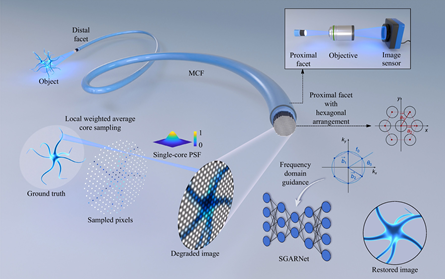
Figure 1| SGARNet imaging method for lensless multi-core fiber
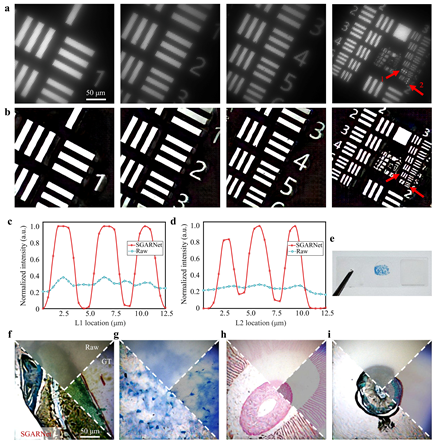
Figure2 | Restoration results for real-object images.
FAYETTEVILLE, GA, UNITED STATES, May 6, 2026 /EINPresswire.com/ -- Lensless multi-core fiber endoscopes suffer from honeycomb-like artifacts that obscure fine structures. To overcome this, researchers from Tsinghua University and Technische Universität Dresden developed SGARNet, which allows us to cleanly erase long-standing honeycomb artifacts via the frequency domain, bypass the need for massive paired data, and seamlessly recover high-fidelity images. The technique will open new avenues for future minimally invasive diagnostics and advanced endoscopic technologies.
Fiber endoscopes are like slender “visual tentacles”: thin, flexible, and minimally invasive. They can reach confined spaces that conventional imaging systems cannot easily access, making them valuable for minimally invasive diagnosis, surgical navigation, and industrial inspection. As imaging probes become smaller, a central challenge remains: how can we obtain clear and stable images from an ultrathin endoscope?
Multi-core c offer a promising route toward compact endoscopic probes. The distal optics can be removed, greatly reducing probe size and complexity. However, a multi-core fiber is made of many discrete fiber cores, much like a regular array of tiny sampling windows. This structure often introduces honeycomb-like artifacts, which obscure image details and reduce imaging reliability. Although filtering, interpolation, and deep learning methods can improve image quality, they often suffer from limited restoration capability, difficult data acquisition, weak physical interpretability, and poor generalization. To address these challenges, the research team developed SGARNet, a physics-guided neural network for lensless multi-core fiber imaging.
Revealing the frequency-domain characteristic of honeycomb artifacts
The team first analyzed the imaging process from the geometry of the multi-core fiber itself. Each fiber core can be viewed as a tiny sampling unit that collects local light information and transfers it to the proximal end to form an image. Because the cores are typically arranged in a hexagonal pattern, this regular structure leaves periodic traces in the captured image. In the frequency domain, these traces appear as a set of bright peaks with clear directions and spacing. These peaks provide a direct clue to the origin of honeycomb artifacts.
Introducing SpectralGate: a physics-aware frequency filter inside the network
Based on this insight, the team designed a SpectralGate module, which acts like a “frequency-domain sieve” inside the neural network. Since honeycomb artifacts tend to appear at specific frequency locations, SpectralGate selectively suppresses these artifact-related components while preserving useful image details. This allows the network to restore images with a clearer physical target, rather than relying purely on data-driven learning. SGARNet uses a lightweight image restoration framework, with SpectralGate placed at a stage where global periodic artifacts can be effectively handled without adding heavy computational cost, making the design suitable for real-time fiber endoscopic imaging.
Improving image quality and validating real-sample generalization
SGARNet showed stable performance across images with different texture complexity. For simple images, it restored color, contrast, and structural information effectively. For more complex images with fine details, it suppressed honeycomb artifacts while preserving the main visual content. The team further tested SGARNet using a USAF 1951 resolution target and biological tissue sections. The method clearly recovered fine line structures and resolved a minimum linewidth of about 2.1 μm, consistent with the fiber core size. In biological samples, including wheat caryopsis, nerve tissue, mushroom sections, and woody dicot stem sections, SGARNet achieved clear image restoration, demonstrating its potential to transfer from projection-based training data to real biomedical imaging scenarios.
References
DOI
10.37188/lam.2026.050
Original Source URL
https://doi.org/10.37188/lam.2026.050
Funding Information
This work was supported by the National Natural Science Foundation of China (Grant Nos. W2511066, 62235009 and 62305183), and partially funded by the Deutsche Forschungsgemeinschaft (DFG, Cz 55/61-1).
Lucy Wang
BioDesign Research
email us here
Legal Disclaimer:
EIN Presswire provides this news content "as is" without warranty of any kind. We do not accept any responsibility or liability for the accuracy, content, images, videos, licenses, completeness, legality, or reliability of the information contained in this article. If you have any complaints or copyright issues related to this article, kindly contact the author above.
